Parallel Claude Chat Architecture for Next.js Development
Parallel Claude Architecture for Context Limit Workarounds
A developer has open-sourced a pattern for running multiple Claude AI chats in parallel on the same codebase to overcome context limitations when building Next.js applications. The system uses Claude's MCP connector to write Python code via SQL INSERT into a shared Supabase database table.
Technical Implementation
The architecture consists of three main components:
- Claude writes Python code through SQL INSERT operations into a shared database table using the Supabase MCP connector
- A Google Colab notebook polls the database table every 3 seconds, executes the code, and writes the output back to the database
- Claude reads the execution results and continues the development process
Each Claude chat is assigned a different scope (data vs frontend) to prevent editing conflicts on the same files. In one afternoon session, this approach resulted in:
- 15+ features deployed
- 87% build success rate across both Claude instances
- Zero merge conflicts
Open Source Availability
The full pattern is available as MIT-licensed open source with no signups required. The repository includes:
- Bridge table SQL schema
- Colab polling agent implementation
- Role assignment templates
The system works natively with Claude's MCP connector and is designed for developers hitting context limits when using AI coding assistants for complex projects.
📖 Read the full source: r/ClaudeAI
👀 See Also

Bifrost LLM Gateway: 11 Microsecond Overhead, Single Binary in Go
Bifrost is an open-source LLM proxy written in Go that routes requests to OpenAI, Anthropic, Azure, and Bedrock with 11 microsecond overhead per request, handling 5,000 RPS on a $20/month VPS.
MCP Server Connects Claude to CellarTracker Wine Inventory
A developer built an MCP server that connects Claude directly to CellarTracker accounts, allowing conversational queries about wine inventory, tasting notes, purchase history, and drinking windows without manual CSV exports.
context-os: Open-source tool reduces Claude Code token consumption by 27-42%
context-os is a local context optimizer that hooks into Claude Code automatically, compressing tool output before Claude sees it and reducing token consumption by 27-42% depending on content type.
Building a Geological Clock with Claude Code: Single HTML + Three.js
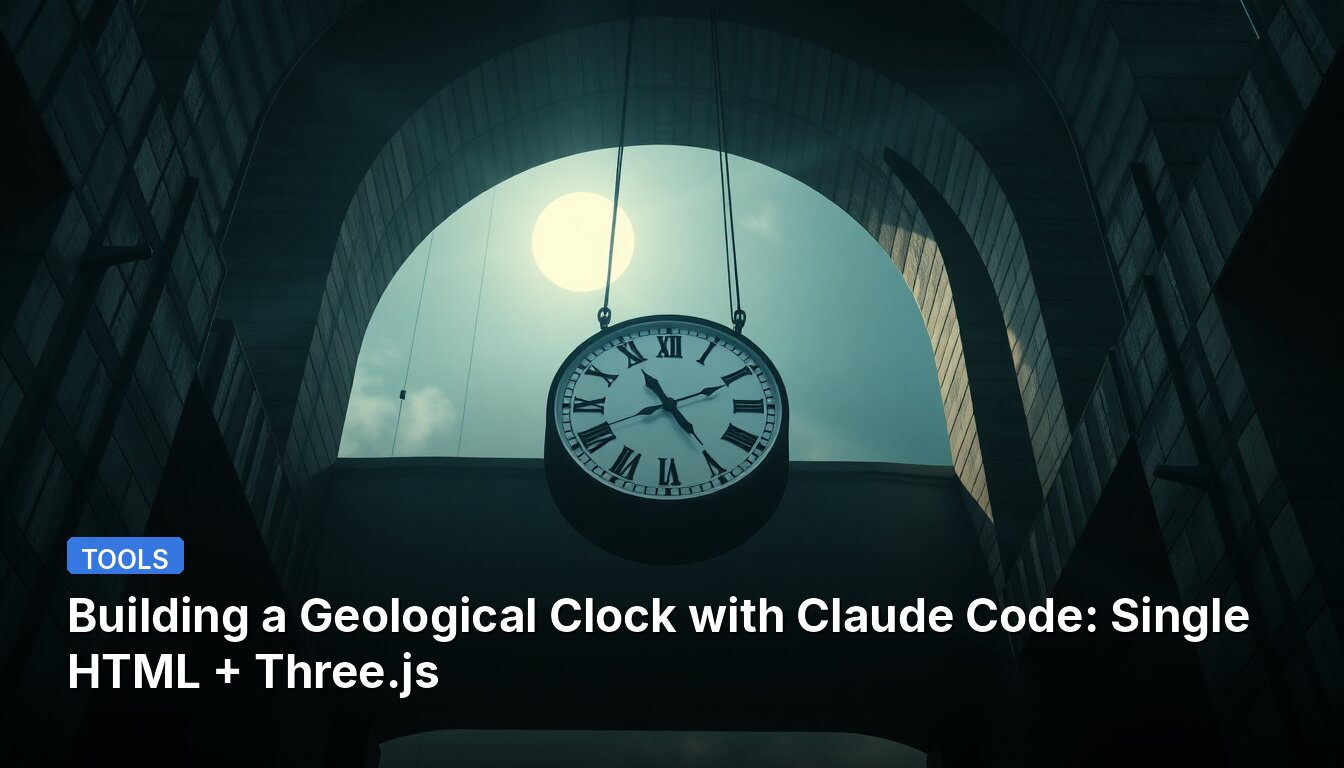
A product designer built eona.earth, a geological clock that maps Earth's 4.5 billion years onto 12 hours, using Claude Code, Three.js, and custom WebGL shaders — all as a single HTML file with no build step.